Metamorphosis 2

Metamorphosis 2
Letters of gratitude to the long dead (Bakersfield, California 1963 to 1965)
Larry’s role models in his coming-of-age years were Sam McCall and Professor Walter Kaufmann, his social psychology teacher, who went down to the southern states and joined the civil rights protests there. Kaufmann and McCall were great friends. Sam McCall, in whose house Larry was living, was a friend as well as being one of his professors. Sam owned a ranch in Oregon and Larry used to stay there in the summer vacations and ride horses. Later, when Larry was in Paris and England, Sam McCall came over to visit him.
Also influencing Larry’s values and activities was Tom Liggett who ran the Kern County Civil Liberties magazine (KCCCL) and who interested Larry in joining the Congress for Racial Equality (CORE). He volunteered as secretary for the local branch of CORE. He was also influenced, at a distance, by César Estrada Chávez, an American labour leader, community organiser, businessman, and Latino American civil rights activist. Along with Dolores Huerta, he co-founded the National Farm Workers Association, which later merged to become the United Farm Workers labour union. These were people Larry interviewed for the KCCCL magazine.
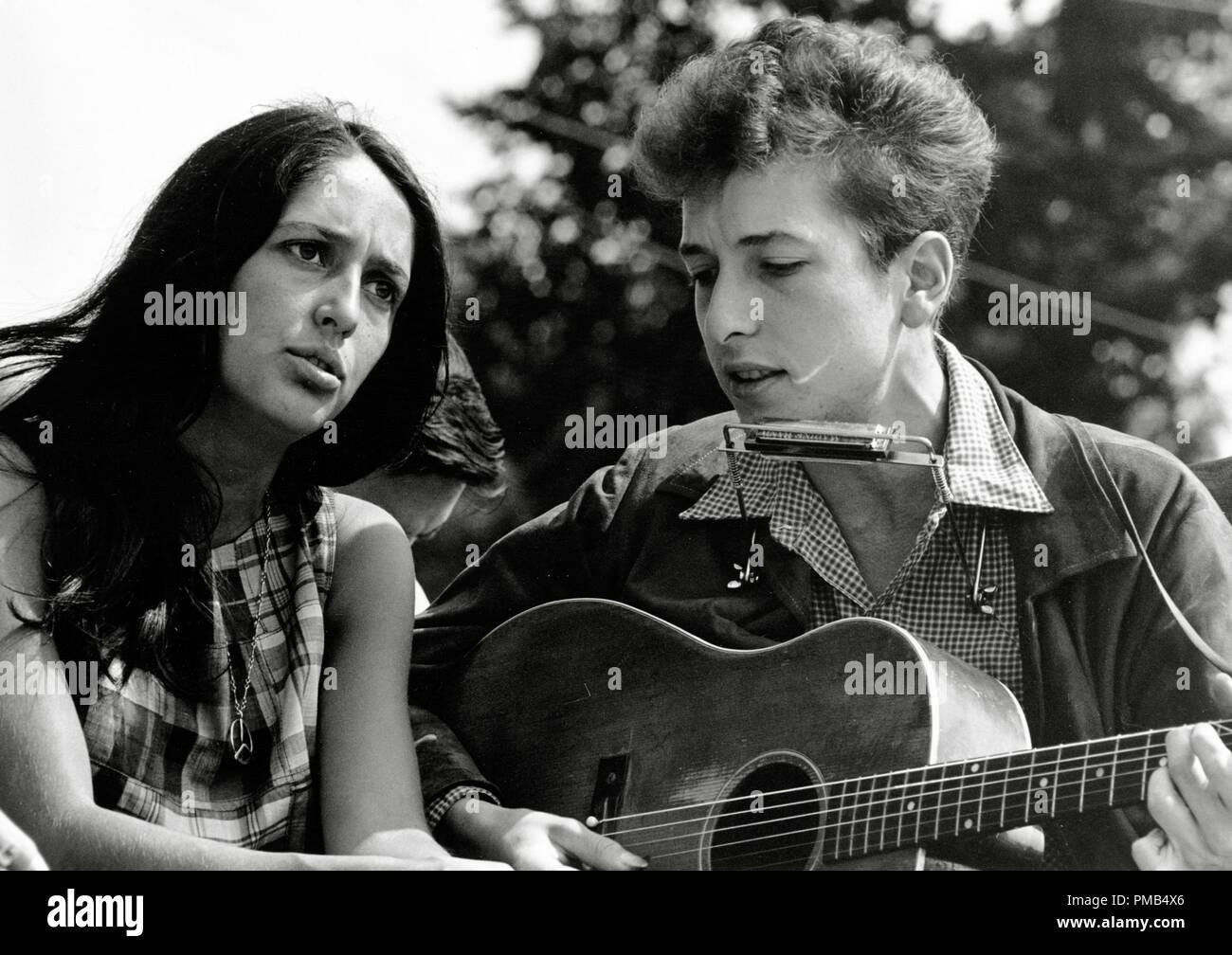
In his role as editor, one of the things Larry did was infiltrate the John Birch Society (JBS), a radical far-right organisation that opposed the civil rights movement and was said to have affiliations with the Ku Klux Klan. Larry attended their meetings and reported on plans to disrupt civil liberties events. He wore a tie and suit and assumed the role of a right-wing American. He knew all the jargon and right-wing speak through listening to his mother. Eventually he was found out. Because of this, crosses were burned Sam McCall’s lawn. And it was probably the JBS who set George Davis’ sports coupé alight. George was a big man of 6 foot 8 inches and gay at a time when it was still illegal. And George fancied Larry! He would try to seduce him by reading poetry aloud. Being a DJ, he had a honeyed voice. There would often be bands sleeping in their front room. Both Dylan and Baez performed in Bakersfield. George encouraged Larry to write poetry and slogans for protests.
Larry doesn’t remember where he was when the news of President JF Kennedy’s assassination came through (22 November, 1963). But he was certainly aware of how the next president, Lyndon B Johnson, escalated the war in Vietnam. The USA had been involved in the Vietnam war since 1961, when US military advisers began accompanying South Vietnamese troops on operations. For the US, the war started in August 1964 when President Johnson reported that North Vietnamese gunboats had attacked two US destroyers in the Gulf of Tonkin. Larry’s protest marches, which had begun as anti-racist marches, now became protest against the Vietnamese war. His mother was a far right-wing supporter and both his parents were appalled at his anti-war stance. His home in San Jose was the polling station, and citizens would place their vote in his old bedroom.
Larry got to know Tom Liggett’s two daughters. Roseanne, who helped on the magazine and who belonged to the political club to which she would take Larry for some of the debates; and her younger sister, Judy, who was studying at Antioch College, Ohio. Judy became Larry’s girlfriend. Her story to follow . . .
As part of his sociology course, Larry did a research project on racial prejudice, comparing racial attitudes and prejudice between three working-class neighbourhoods: an all-white, an all-black/coloured and a mixed-race neighbourhood. The findings confirmed the hypothesis that proximity and interaction reduce fear and prejudice. ‘I often went into homes in the early evening to engage with the whole family. My experience selling encyclopaedias served me in good stead. I loved the music coming from the houses in black/coloured neighbourhoods . . . this spurred my interest in the Afro-American arts – dance, music, poetry . . .
Influenced by Sam McCall and Walter Kaufmann, Larry became an activist in the civil rights movement. Not long after Larry learnt to read, and encouraged by George the DJ with whom he shared a house, he started teaching reading and writing skills at a Saturday school. The Saturday school taught Hispanics, Mexicans, Native and Afro-Americans to read and write so that they could vote and claim other basic rights.
‘The school was for children as well, but we focused on the adults. George was the leader and I was his sidekick. George used a lot of songs and music in his teaching and was popular with the students. Mostly the classes were at tables outside in the southern Californian sun. The first thing we taught was spell their names and practice writing their signature as well as basic form-filling. We had an interpreter, but we taught in English because that was what they needed in order to get the vote. My interest was as an activist and anti-racist campaigner.
‘I also took part in and helped organise protest marches about racial inequality. I spent a night in prison after one march; and on another my placard was taken away by a policeman and I was hit over the head with it.’
Larry’s interest in writing deepened when he was asked by Tom Liggett, who founded the Kern County Council for Civil Liberties (KCCCL), to edit their magazine, where he sometimes stayed up all night getting the magazine proofed and printed. Larry’s research was published in the KCCCL magazine which, he says, was the main reason he got top marks for sociology.
Here are four letters of gratitude Sukhema wrote to Sam McCall and Walter Kaufmann, Tom Liggett and George Davis.
Sam McCall, professor of political science, Bakersfield College, was one of the most popular and respected faculty members on the Bakersfield College campus.
Dear Sam
Attending your political science classes at Bakersfield (1963-5) changed my life from an aspiring capitalist to a radical activist promoting social justice and racial equality. You introduced me to Tom Liggett, a journalist advocating world government. You invited me to live in your house with a gay communist DJ – George Davis. You encouraged me to volunteer at a Saturday school teaching literacy to Afro-Americans and Mexican migrant workers so they had enough grasp of English to vote in US elections. Inspired by you I infiltrated the local John Birch Society (Western states version of the Klu Klux Klan), which led to crosses being burned on your lawn, and bombs placed in your car. And you gave me top marks in political science which helped me gain a place as a third-year student at the University of California – the new Santa Cruz campus. When we realised the Santa Cruz campus hadn’t been completely built, so I couldn’t enrol for another year, you suggested I study social psychology in Paris for a year. The summer before leaving for Paris, I stayed at your ranch in Oregon, riding horses, swimming in your river and having long conversations with you and your mother into the night. You didn’t know, and neither did I, that I would never return to live in the USA. When I settled in Britain, you came to visit me and continued encouraging me to engage with politics and trade unions. I was working on adventure playgrounds at the time and, on your suggestion, I started a trade union for playleaders. As a young man, you gave me what I needed to continue learning about how the world works, and how to promote social justice and combat racism and inequality. I’m still learning.
Walter Kaufmann was eight when he came with his parents as German Jewish refugees in 1940. Even as a child he was viscerally conscious of issues of racism and anti-semitism. He became involved with CORE (Congress of Racial Equality) while teaching at a community college in Bakersfield, California. It was a town very much like the South in some ways, settled by immigrants from the Dust Bowl [the region devastated by drought and soil loss in the 1930s — ed]. The economy centred around cotton, oil, and, in Delano, the grape industry. He organised a boycott of Bank of America which resulted in forcing them to hire Black tellers, and challenged the Bakersfield sheriff’s policies which tried to prevent high school students from picketing. Walter wanted to go where the action was, so he decided to volunteer in the offices in Jackson Mississippi of COFO (Congress of Federated Organisations), an umbrella group for the Congress of Racial Equality and the National Association for the Advancement of Coloured People (CORE and the NAACP)
Thank you, dear Walter,
You were my sociology professor in Bakersfield, and encouraged me to get involved with the civil rights movement and to join CORE (Congress of Racial Equality), and volunteer as the secretary for the local branch. I think it was your idea that I did an action-research project about the roots of racial prejudice by interviewing folk in three neighbourhoods: all black including Mexican migrant workers, mixed neighbourhood of white and black, and an all-white neighbourhood. I fell in love with the music spilling out of the houses of Mexicans and Afro-Americans. I saw a black man tarred and feathered, tied to a lamppost. I did the research with another student and we were given top marks for our thesis and an extract was published in the civil liberties journal I edited. You told us that our thesis was of a post-graduate standard, and I’m sure this helped me get a place at the University of California in Santa Cruz where I would have studied social anthropology with Gregory Bateson . . . That’s another story for later!
Thomas Liggett held a number of journalism jobs including newspaper reporter and city editor, magazine writer and editor. He taught writing courses and published the award-winning children’s book ‘Pigeon, Fly Home!’ (1956). In 1970 he started the periodical ‘World Peace News’, devoted to the notion that the United Nations should be the place where a true world government is formed, with the authority to outlaw war. This was aligned to the original concept of the UN, as envisioned by Roosevelt and Churchill. Tom has published the World Peace News continuously since 1970. The return address banner reads:
AMERICAN MOVEMENT FOR WORLD GOVERNMENT WORLD PEACE NEWS
Dear Tom
I don’t remember how we met, though it was probably through Sam McCall or your daughter Roseanne. When I left America for Paris, hitchhiking with your daughter Judy from San Francisco to Antioch, Ohio then on to New York City; you gave me a press card for ‘World Peace News’ and instructed me to attend conferences, protests, campaigns and send you reports. I was your man in Europe! Before that you appointed me as editor of the Kern County Council for Civil Liberties monthly journal. I recall staying up all night printing and collating each issue to meet the deadline. You believed in me, giving me responsibilities as an editor I didn’t know I was capable of fulfilling. That kickstarted a lifetime of writing and promoting the power of words, the might of the pen over the sword. And you instilled in me a passion for justice and a vision of cooperation between nations. Thank you for opening my eyes to the possibility of world peace through world government, and recognising the many ways there are to serve.
George Davis DJ was a tall gay young man at 6 foot 8 inches. When I met him, we were both in our early twenties. Sam McCall championed George who had left school at 14. We rented the big house while Sam had a flat above the garage. Our house was a hive of radical activity with visiting bands couch surfing in our front room.
Dear George
I remember how it was with us before and after you chased me down the road with a butcher’s knife. I remember how glad I was that I could run faster than you, even though you were eight inches taller than me. I think you had a heart condition. I don’t remember what triggered the chase – probably that I refused to have sex with you. It was a cold December night in Bakersfield. A bomb had been placed in your Jaguar. I remember before the chase, most nights you would read poetry aloud to me with a deep resonant, honeyed voice: Vachel Lindsay, Carl Sandburg, Walt Whitman, Edgar Allan Poe, and so many more. I’ll never forget you singing Lindsay’s ‘Santa Fe Trail’ with seductive vigour: you became the train trundling along the track. I am forever grateful to you, your voice, your love of poetry and songs, which inspired me to read and write poetry and sing. My first poems were slogans for protest placards and banners. I learned so much from you and all the musicians who used to camp in our living room. You were kind and generous to me – you even bought me my first car. We were a good teaching team at the Saturday school for young adults: Mexican migrant workers and Afro-Americans who wanted to learn to read and write so they could vote. You were the first to teach me how the power of poetry and songs can change lives.
*******************************************
Have there been times of metamorphosis in your life. Who helped you? What are you grateful for? Can you tell your story? Try starting your life story with friends and notice how the story changes from person to person. . . .